Skip to product information
1 of 3

Happy Puppy Organics

Happy Belly - for gut health with Slippery Elm

Happy Belly - for gut health with Slippery Elm

4 total reviews

Regular price Rs. 599.00
Regular price Sale price Rs. 599.00
Sale Sold out
Shipping calculated at checkout.
Quantity


Happy Puppy Organics · Functional Gut Health

Four Herbs That Coat, Soothe,
Regulate, and Heal the Gut.

Slippery elm, marshmallow root, psyllium husk, and DGL work together across the entire digestive tract - from the protective mucus layer to the microbiome. For daily gut maintenance, chronic conditions like IBD, and acute upsets that need relief fast.

🌿 Slippery Elm 🌼 Marshmallow Root 🌱 Psyllium Husk 🌾 DGL 🇮🇳 Handmade in India

What Happy Belly Does

5 Ways This Formula Supports Your Dog's Gut

🛡️

Gut Wall Coating and Protection

Slippery elm and marshmallow root both produce a thick mucilaginous gel when hydrated. This gel coats the entire digestive tract from oesophagus to colon, creating a protective barrier between irritants and the inflamed gut wall - providing immediate soothing relief and reducing further damage.

⚖️

Bidirectional Stool Regulation

Psyllium husk is one of the only natural fibres that relieves both loose stools and constipation depending on the gut's needs. In diarrhoea, it absorbs excess water and adds bulk. In constipation, it retains moisture and softens stools. A genuinely bidirectional gut regulator.

🔬

Mucosal Lining Repair

DGL (Deglycyrrhizinated Licorice) stimulates the production of mucus-secreting cells in the gut lining and supports the regeneration of damaged mucosal tissue - the protective layer that is eroded in dogs with IBD, leaky gut, or chronic digestive inflammation.

🦠

Prebiotic Microbiome Support

Psyllium husk's soluble fibre acts as a prebiotic - selectively feeding beneficial gut bacteria including Lactobacillus and Bifidobacterium species. A balanced microbiome is the foundation of digestive immunity, stool consistency, and nutrient absorption.

🌿

Inflammation Reduction Along the Gut

DGL's flavonoids and marshmallow root's polysaccharides both reduce inflammatory cytokine activity in the gut wall. This is particularly meaningful for dogs with IBD or food-related gut inflammation where the cycle of irritation and damage needs to be broken before healing can begin.

The Ingredients and Why They Work

Four Ingredients. The Complete Gut Healing System.


  • Slippery Elm (Ulmus rubra) - Mucilage, Coating and Nutrient Buffering
    Slippery elm bark contains up to 50% mucilage - a complex of polysaccharides that absorb water and form a thick, viscous gel when hydrated. This gel coats the mucous membranes of the entire gastrointestinal tract, creating a physical barrier that protects inflamed tissue from digestive acids, bile salts, and ingested irritants. Unlike anti-diarrhoeal medications that simply slow gut motility, slippery elm addresses the root irritation. Its mucilage also has mild astringent properties that reduce excessive gut secretions contributing to loose stools, while simultaneously providing a nutrient-rich substrate that feeds healing intestinal cells. It is gentle enough to be used during active flare-ups and is one of the few herbal gut remedies with effects visible within hours of the first dose.

  • Marshmallow Root (Althaea officinalis) - Deep Mucilage and Anti-Inflammatory
    Marshmallow root contains a higher concentration of mucilage than slippery elm, composed primarily of pectin, flavonoids, and phenolic acids. Its mucilage is particularly effective at soothing the upper gastrointestinal tract - the stomach and small intestine - where it coats irritated tissue and reduces the hypersensitivity responses that trigger nausea, acid reflux, and food intolerance reactions in sensitive dogs. Its flavonoid compounds additionally inhibit pro-inflammatory mediators including COX-2 and 5-LOX enzymes, reducing the chronic low-level inflammation in the gut wall that perpetuates digestive symptoms even between obvious flare-ups. Marshmallow root is particularly suited to dogs with a history of ulceration, gastritis, or chronic vomiting.

  • Psyllium Husk (Plantago ovata) - Bidirectional Fibre and Prebiotic
    Psyllium husk is a uniquely effective fibre because it works bidirectionally. Its gel-forming soluble fibre fraction absorbs up to 10 times its weight in water - in diarrhoea, this excess water absorption adds bulk and slows transit; in constipation, it retains moisture in the stool, preventing the hardening that causes straining. This bidirectional action makes it suitable for dogs whose gut alternates between both states, which is common in IBD and food sensitivity cases. Its soluble fibre also acts as a selective prebiotic, fermenting in the colon to produce short-chain fatty acids (SCFAs) - butyrate in particular - that are the primary fuel source for colonocytes (colon wall cells) and are essential for maintaining the integrity of the gut barrier.

  • DGL - Deglycyrrhizinated Licorice - Mucosal Repair and Gastric Protection
    DGL is licorice root processed to remove glycyrrhizin - the compound responsible for the blood pressure and hormonal side effects of whole licorice at high doses. What remains is the most therapeutically active portion for gut health: a concentrated source of flavonoids including liquiritin, isoliquiritin, and glabridin, which stimulate the proliferation of mucus-secreting goblet cells in the gut lining. More mucus means better protection of the epithelium against gastric acid, digestive enzymes, and luminal antigens. DGL also reduces Helicobacter-type bacterial adhesion to stomach mucosa, supports the healing of erosive lesions, and modulates the immune response in the gut-associated lymphoid tissue (GALT) that drives inappropriate inflammatory responses in food sensitivity and IBD cases.

The Complete Formula

Slippery Elm
Mucilage coating, acute soothing, and gut wall protection
Marshmallow Root
Upper GI mucilage and COX-2 anti-inflammatory action
Psyllium Husk
Bidirectional fibre regulation and prebiotic SCFA production
DGL
Goblet cell stimulation and mucosal lining repair

What We Never Put In

x
Artificial flavours or sweeteners
x
Synthetic binders or fillers
x
Chemical preservatives
x
Whole glycyrrhizin licorice
x
Parabens or sulfates
x
Anything a dog should not ingest

Is This Right for Your Dog?

Happy Belly is Ideal For...


Dogs with recurring loose stools, diarrhoea, or digestive upset

Dogs with IBD, colitis, or chronic digestive inflammation

Dogs with food sensitivities or intolerances reacting to their diet

Dogs recovering from antibiotics whose gut microbiome has been disrupted

Dogs during or after a diet transition to prevent digestive upset

Any dog for daily gut health maintenance and microbiome support

How to Use

Daily Maintenance or Acute Relief. Both Work.

  1. 1
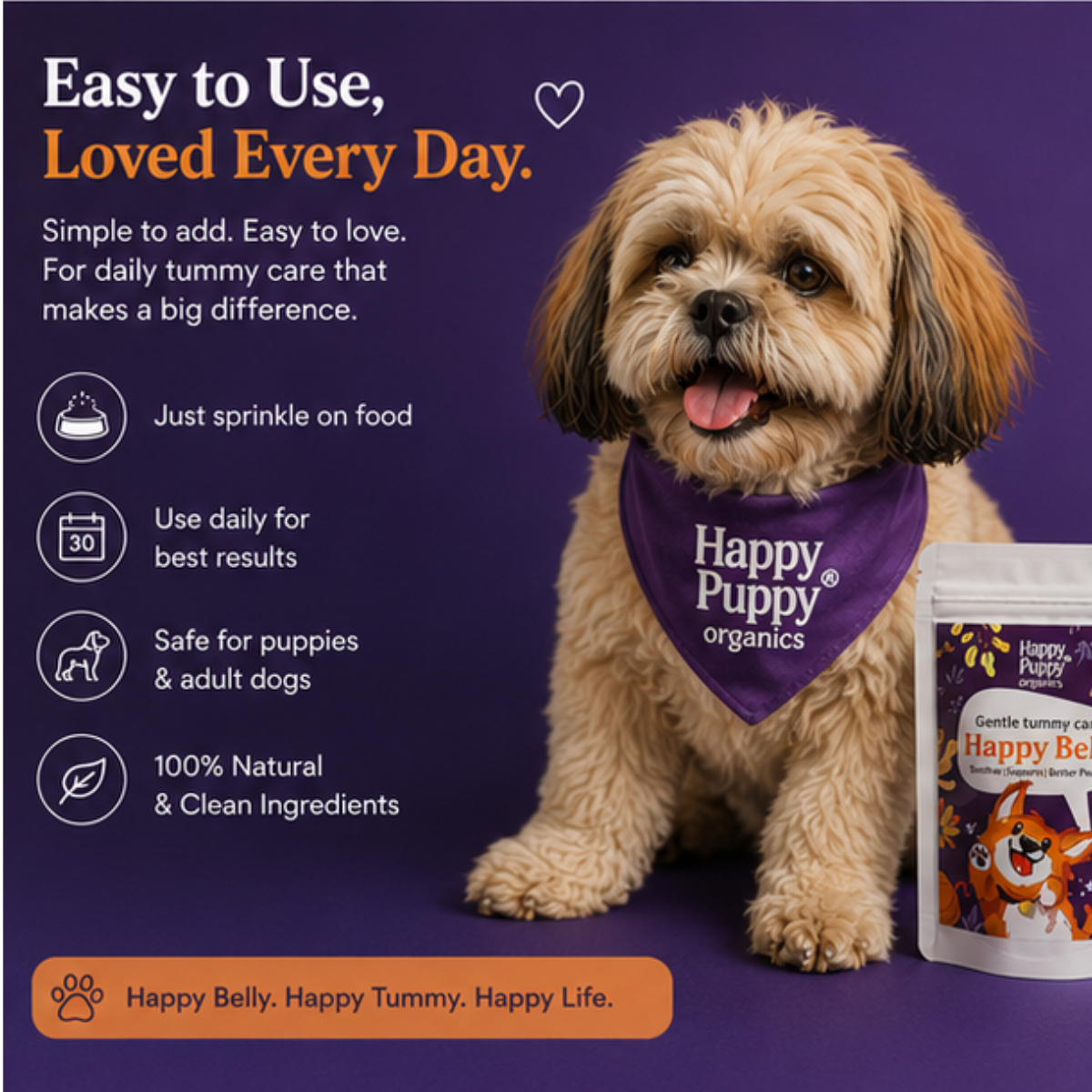
    Add to food or mix in warm brothSprinkle directly over wet or dry food. For acute upsets or to maximise absorption, mix in a small amount of warm bone broth or water. The warm liquid activates the mucilage in slippery elm and marshmallow root, releasing the gel that coats the gut lining most effectively.
  2. 2
    For acute upsets - use as the mealDuring a stomach upset, flare-up, or after eating something problematic, you can give the full dose mixed in warm broth as the entire meal for 2 to 3 days. This rests the gut while delivering maximum mucosal protection and healing support.
  3. 3
    For daily maintenance - add consistentlyAdd once daily to food as part of the regular feeding routine. Consistent daily use builds mucosal lining integrity and microbiome diversity over time - the foundation of a gut that handles dietary variation, stress, and occasional indiscretions without falling apart.

Dosage: 1/2 tsp per 10kg of body weight once daily. During acute upsets, give 2 to 3 times daily mixed in warm broth for 2 to 3 days, then return to daily maintenance dose. For diet transitions, begin 3 to 5 days before the change and continue throughout the transition period.

Questions and Answers

Frequently Asked Questions

Can I use this for acute upsets or only as a daily supplement?

Both. For daily maintenance, add once daily to food to build long-term gut resilience. For acute upsets, give at full dose mixed in warm broth up to 2 to 3 times per day for 2 to 3 days - this can be given as the entire meal during a flare-up. Many pet parents report visible improvement in stool quality within the first dose when used this way.

What is DGL and why is it in the formula?

DGL stands for Deglycyrrhizinated Licorice - licorice root processed to remove glycyrrhizin, which can cause side effects at high doses. What remains is the most potent portion for gut healing: flavonoids that stimulate mucus-secreting goblet cells, support mucosal lining repair, reduce gastric irritation, and modulate the inflammatory immune response in the gut. It provides the gut-healing benefits of licorice without any of the side effects.

How quickly does it work?

The mucilaginous ingredients begin coating the gut lining within minutes of ingestion. Stool consistency improvement in acute diarrhoea is often visible within the first dose. For chronic conditions like IBD or food sensitivities, gut lining repair and microbiome rebalancing develops over 2 to 4 weeks of consistent daily use.

Is this suitable for dogs with IBD or food sensitivities?

Yes - these are among the primary use cases this formula was developed for. Slippery elm and marshmallow root reduce gut wall inflammation that drives IBD flare-ups. DGL stimulates the mucus layer that protects the gut lining from allergens and digestive acids. Psyllium husk provides the prebiotic fibre that supports beneficial bacterial populations disrupted in food sensitivity cases. Used consistently, Happy Belly addresses the gut environment rather than just managing symptoms.

A Gut That Works the Way
It Was Designed To.

Four herbs. One formula. For the dog whose belly has never quite been right. Handmade in small batches.

Ships across India  ·  Use code HAPPY10 for 10% off your first order

View full details