


Happy Puppy Organics
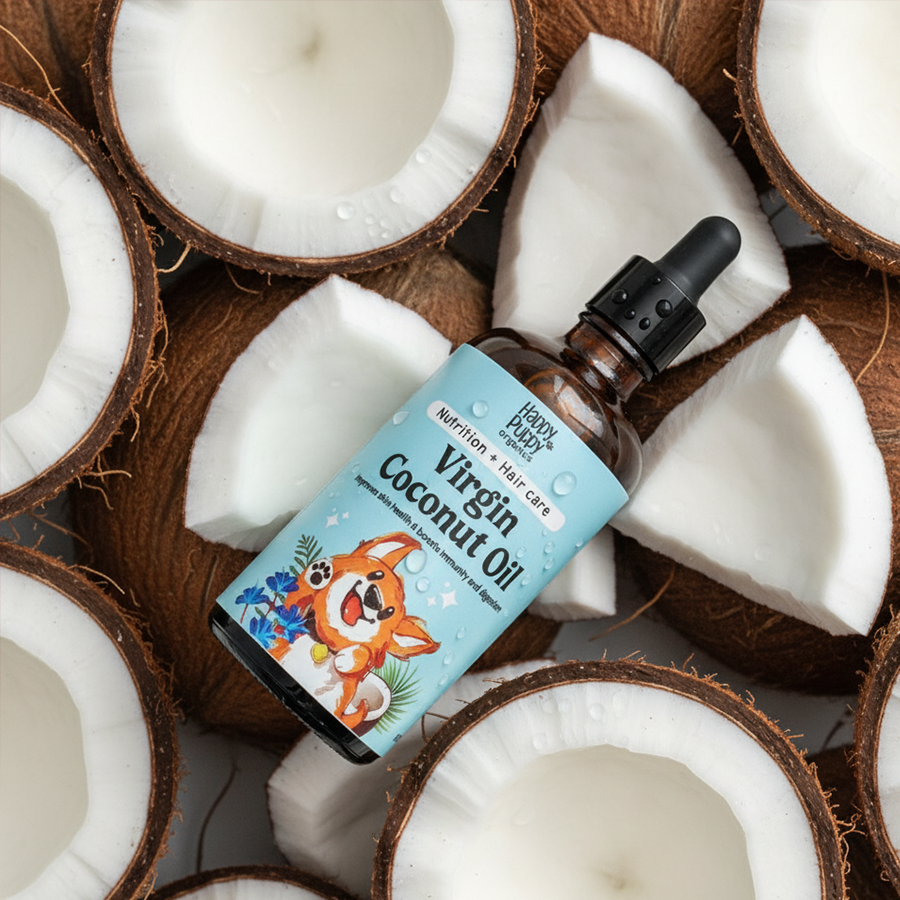
Virgin Coconut Oil for Dogs - Digestion & Natural Anti-Fungal Support
Virgin Coconut Oil for Dogs - Digestion & Natural Anti-Fungal Support
5.0 / 5.0
(1) 1 total reviews
Couldn't load pickup availability
Happy Puppy Organics · Functional Nutrition
One Oil That Works
Inside and Out.
Cold-pressed virgin coconut oil - rich in lauric acid, caprylic acid, and MCTs that actively fight yeast and fungal infections, support digestion and immunity, and nourish the skin and coat whether added to food or applied directly. 100% pure. No additives. No heat.
Does your dog have recurring yeast or fungal skin infections that keep coming back after treatment? A dull or dry coat that does not improve with grooming? Loose stools that persist without a clear dietary cause? Or persistent odour from skin folds, paws, or ears?
These problems often share a common underlying factor: an imbalanced skin microbiome or a gut environment that supports yeast overgrowth. Virgin coconut oil addresses both simultaneously - its medium-chain fatty acids fight the yeast and bacteria causing skin and gut symptoms directly, while its oral use supports the immune and digestive environment that prevents recurrence.
What Virgin Coconut Oil Does
5 Ways Coconut Oil Supports Your Dog's Health
Antifungal and Antimicrobial Action
Lauric and caprylic acid disrupt the cell membranes of Malassezia yeast and Candida species - the organisms responsible for most canine skin infections, ear infections, and that characteristic musty odour. Applied topically and given orally, these fatty acids address the infection at the skin surface and systemically.
Coat Shine and Skin Nourishment
Coconut oil's medium-chain fatty acids penetrate the hair shaft rather than sitting on the surface, reducing protein loss from the cortex and improving tensile strength. Added to food daily, it delivers these fatty acids via the bloodstream to the skin and follicles - producing the glossy coat and reduced dryness that topical products alone cannot achieve.
Digestive Support and Gut Balance
MCTs in coconut oil have antimicrobial activity against the pathogenic bacteria that contribute to digestive upset, while being readily absorbed and used as an energy source without the digestive strain of long-chain fats. This makes coconut oil a gentle digestive support that also reduces the gut bacterial populations that drive yeast overgrowth systemically.
Immune Function Support
Lauric acid is converted in the body to monolaurin, a potent antimicrobial compound that enhances macrophage activity and reduces the inflammatory signalling that allows pathogenic microorganisms to establish and persist. Regular dietary coconut oil supports the innate immune environment that prevents recurring infections.
Topical Skin Healing
Applied directly to hot spots, cracked paws, dry skin patches, or irritated skin folds, virgin coconut oil provides immediate antimicrobial protection, moisture retention, and anti-inflammatory lipid compounds that reduce redness and support epithelial repair - without any chemicals that could further irritate compromised skin.
The Science Behind It
MCTs, Lauric Acid, and Why Cold-Pressing Matters
-
Lauric Acid (C12) - Antifungal, Antimicrobial and Monolaurin ConversionLauric acid comprises approximately 48 to 52% of virgin coconut oil's fatty acid profile - by far the highest concentration of any common food oil. As a medium-chain saturated fatty acid, lauric acid disrupts the lipid bilayer membranes of enveloped viruses, gram-positive bacteria, and fungi including Malassezia pachydermatis and Candida albicans - the two organisms most frequently responsible for canine skin and ear infections. This membrane disruption is directly antifungal and bactericidal at the concentrations achieved both topically and in gut tissue after oral consumption. When metabolised, lauric acid is converted to monolaurin - a monoglyceride with documented broad-spectrum antimicrobial activity and immunomodulatory properties that enhance macrophage killing capacity. This dual action (direct membrane disruption plus monolaurin-mediated immune enhancement) is what makes lauric acid uniquely effective compared to other antifungal fatty acids.
-
Caprylic Acid (C8) and Capric Acid (C10) - Candida and Malassezia TargetingCaprylic acid (approximately 7% of coconut oil) and capric acid (approximately 6%) are the two MCTs with the most targeted activity against Candida and Malassezia yeast species. Caprylic acid disrupts the cell wall integrity of Candida albicans specifically - it inhibits the transition of Candida from its benign yeast form to its pathogenic hyphal form, which is the stage responsible for invasive tissue colonisation and biofilm formation. Capric acid similarly inhibits Candida hyphal transition and has direct fungicidal activity against both Candida and Malassezia at the concentrations achieved in intestinal tissue following oral supplementation. In dogs with recurring yeast-related skin conditions, the oral route of caprylic and capric acid delivery reaches the gut microbiome where dysbiotic yeast populations are often established - addressing systemic yeast burden in a way that purely topical antifungals cannot.
-
MCT Absorption and Energy MetabolismUnlike long-chain fatty acids (which require bile emulsification and lymphatic transport), medium-chain triglycerides are absorbed directly from the intestinal lumen into the portal circulation and transported straight to the liver, where they are rapidly oxidised for energy. This makes MCTs an immediately available energy source with minimal digestive burden - beneficial for dogs with compromised digestion, sensitive guts, or those recovering from gastrointestinal illness. MCTs also have a mild thermogenic effect that supports metabolic rate, and their rapid hepatic oxidation means they are less likely to contribute to fat storage than equivalent caloric intake from long-chain fats.
-
Cold-Pressing Preserves Bioactive IntegrityVirgin coconut oil is cold-pressed from fresh coconut flesh without heat or solvents, preserving the natural tocopherols (vitamin E), polyphenols, and phytosterols that are destroyed or removed during the refining process used for commercial cooking-grade coconut oil. The tocopherol content provides antioxidant protection both within the oil (preventing rancidity) and in biological tissue after consumption. The polyphenol content - primarily ferulic acid and p-coumaric acid - contributes additional anti-inflammatory and antioxidant activity. Refined coconut oil is technically purer but therapeutically diminished - the cold-pressed, unrefined version retains the complete functional profile of the whole coconut.
Key Bioactive Compounds
Two Ways to Use It
Oral and Topical. Both Effective.
Add to Food Daily
Add directly to wet or dry food once daily. Oral use delivers lauric acid and MCTs via the bloodstream to skin, follicles, and gut tissue - supporting coat quality and skin health systemically. Many pet parents find dietary use alone produces visible coat improvement without any topical application. Also useful as a carrier oil for the Bounce joint supplement or Black Seed Oil to improve fat-soluble compound absorption.
Apply Directly to Skin
Warm a small amount between your palms and apply to hot spots, cracked paws, dry patches, skin folds, or irritated areas. The oil absorbs without leaving a heavy residue. For ear yeast infections, apply a small amount to the outer ear canal entrance with a cotton pad. For coat conditioning, work through the coat before a bath or between baths as a leave-on treatment.
What We Never Put In
Is This Right for Your Dog?
Virgin Coconut Oil is Ideal For...
How to Use
Start Small. Build Gradually.
-
1Introduce gradually to avoid loose stoolsStart at a quarter of the target dose for the first week. MCTs are rapidly absorbed and some dogs experience loose stools if the dose is increased too quickly. A slow introduction allows the gut to adapt to the increased MCT load without digestive disruption.
-
2Add to food once dailyScoop directly onto wet or dry food and mix in. Coconut oil solidifies below 24 degrees Celsius - if it is solid, a few seconds in your palm warms it to a liquid. Mixing with food improves palatability and aids absorption alongside other dietary fats.
-
3Apply topically as neededFor active skin conditions, apply a small amount to affected areas once or twice daily. For paw care, massage into pads after walks. For ear yeast, apply to the outer canal entrance with a cotton pad - do not insert into the ear canal itself.
Oral dosage guide: Under 5kg: 1/4 tsp daily · 5 to 10kg: 1/2 tsp daily · 10 to 30kg: 1 tsp daily · Over 30kg: up to 2 tsp daily. Pairs well with Black Seed Oil as a combined antifungal protocol. Also useful as a fat carrier when giving Bounce joint supplement or rosehip powder to improve absorption of fat-soluble compounds.
Questions and Answers
Frequently Asked Questions
How much coconut oil should I give my dog each day?
Start at a quarter of the target dose for the first week to allow the gut to adjust. Target doses: under 5kg give 1/4 tsp; 5 to 10kg give 1/2 tsp; 10 to 30kg give 1 tsp; over 30kg give up to 2 tsp, all once daily added to food. Too much too quickly is the main cause of loose stools - gradual introduction prevents this entirely.
Can coconut oil help with yeast infections?
Yes. Lauric acid and caprylic acid both have documented antifungal activity against Malassezia pachydermatis and Candida species - the yeasts responsible for most canine skin infections. Apply topically to affected areas daily and add to food simultaneously. Oral use addresses the systemic yeast burden in the gut microbiome that drives recurring skin infections, which topical-only treatments cannot reach.
Why cold-pressed rather than refined?
Cold-pressing preserves the full tocopherol, polyphenol, and bioactive fatty acid profile of the coconut. Refined coconut oil undergoes bleaching, deodorising, and high-heat processing that removes or degrades these compounds. For use as a functional supplement, cold-pressed virgin oil retains the complete therapeutic profile. The unrefined smell and mild coconut flavour are signs of an uncompromised product.
Can I apply coconut oil directly to my dog's skin and coat?
Yes. Warm a small amount in your palms and apply directly to hot spots, cracked paws, dry patches, or skin irritation. It absorbs well without leaving a heavy residue. For coat conditioning between baths, work a small amount through the coat and leave on. It also makes an excellent carrier for the Shiny Fur Spa Oil or Black Seed Oil when combined for topical application.
The Purest Oil for the Healthiest
Skin, Coat, and Gut.
Cold-pressed. 100% pure. Antifungal, nourishing, and effective whether added to food or applied directly. Handmade in small batches.
Ships across India · Use code HAPPY10 for 10% off your first order
Share


Coconut oil is showing great effect on dog's hair, We are not even oiling her hair. I'm using it in her diet, and it still has a huge impact on skin dryness and hair growth/quality. Best product! Thank you.
Coconut oil is showing great effect on dog's hair, We are not even oiling her hair. I'm using it in her diet, and it still has a huge impact on skin dryness and hair growth/quality. Best product! Thank you.