Happy Puppy Organics
Colostrum for dogs- Immunity, Gut & Allergy Support
Couldn't load pickup availability
Happy Puppy Organics · Functional Nutrition
Nature's First Immune System.
Now a Daily Supplement.
Colostrum is the extraordinary first milk produced in the 24 to 48 hours after birth - a concentrated delivery of immunoglobulins, growth factors, and bioactive peptides designed to transfer immunity and build a healthy gut from the very first day of life. Ethically sourced. Low-heat processed. Standardised for bioactive potency.
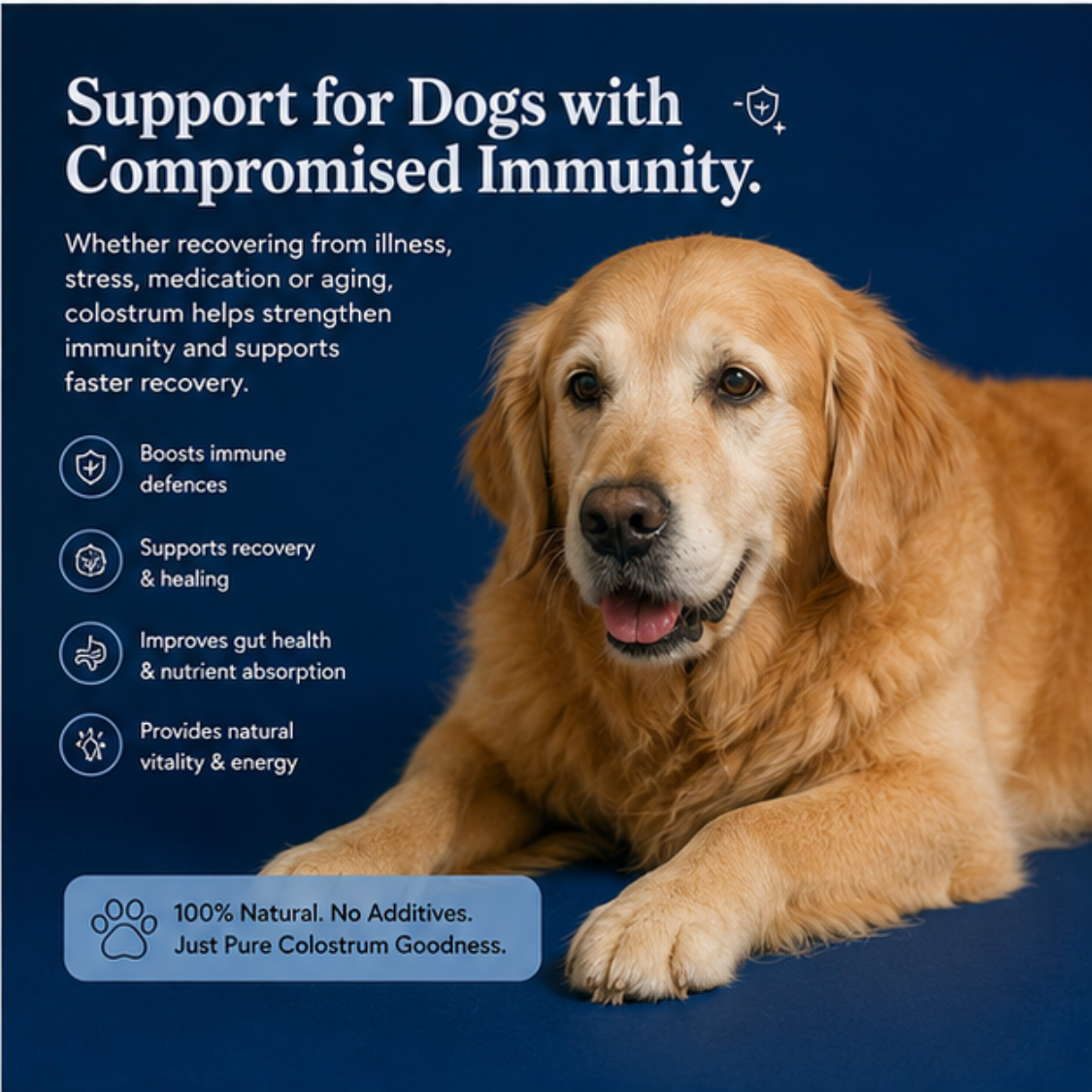
Most chronic problems in dogs - recurring infections, food sensitivities, skin conditions, digestive issues, and slow recovery from illness - share a common upstream cause: a compromised gut lining and a dysregulated immune system.
These two problems are inseparable. A leaky gut allows bacterial endotoxins into the bloodstream, creating systemic immune activation that drives chronic inflammation everywhere in the body. Restoring the gut lining restores immune regulation. Colostrum addresses both simultaneously - its immunoglobulins modulate and restore immune function while its growth factors physically repair the gut barrier and rebuild tight junction integrity.
What Colostrum Does
5 Ways Colostrum Supports Your Dog's Health
Immune Modulation via Immunoglobulins
IgG, IgA, and IgM immunoglobulins bind pathogen surface antigens in the gut, neutralising them before they trigger systemic immune responses. This is mucosal immune defence - the first line of protection that operates before systemic immunity is even activated. Crucially, these immunoglobulins modulate rather than simply stimulate immunity, supporting regulation and repair.
Gut Barrier Repair and Leaky Gut
IGF-1 and TGF (transforming growth factors) stimulate intestinal epithelial cell proliferation, repair damaged villi, and upregulate the expression of tight junction proteins - occludin, claudin, and ZO-1 - that seal the gut lining against permeability. This directly addresses the leaky gut mechanism driving chronic inflammation in many dogs.
Lactoferrin and Antimicrobial Defence
Lactoferrin is an iron-binding glycoprotein with broad-spectrum antimicrobial and antiviral properties. By sequestering iron that pathogenic bacteria require for growth, lactoferrin creates an inhospitable environment for colonisation. It also has direct anti-inflammatory and immune-modulating activity on gut-associated lymphoid tissue.
Proline-Rich Polypeptides and Immune Calibration
PRPs are small peptides that act on thymus tissue and regulatory T-cells to calibrate immune responses. In underactive immune states, PRPs stimulate immune activity. In overactive states such as allergies and autoimmune conditions, they reduce inappropriate immune reactivity. This bidirectional calibration is what makes colostrum valuable for both immunocompromised and hypersensitive dogs.
Microbiome Balance and Gut Resilience
Colostrum's prebiotic oligosaccharides and immune factors selectively support beneficial gut bacteria while creating a gut environment inhospitable to pathogenic species. This microbiome-shaping effect, combined with improved gut barrier integrity, builds the digestive resilience that makes dogs less reactive to dietary changes, environmental stressors, and antibiotic-related disruption.
The Science Behind It
The Bioactive Compounds That Make Colostrum Extraordinary
-
Immunoglobulins (IgG, IgA, IgM) - Mucosal Immune TransferImmunoglobulins are Y-shaped antibody proteins produced by B-lymphocytes that bind specific pathogen antigens with high specificity. Bovine colostrum contains exceptionally high concentrations of IgG (the primary systemic antibody), secretory IgA (the dominant immunoglobulin in mucosal surfaces including the gut, respiratory tract, and skin), and IgM (the first responder immunoglobulin in acute infection). When consumed orally, these immunoglobulins survive gastric passage to a meaningful degree and coat the intestinal mucosa, where they bind pathogens including bacteria, viruses, and parasites, preventing their adhesion to gut epithelial cells - the prerequisite for infection. The cross-species compatibility of bovine immunoglobulins with canine immune receptors is well-established, making bovine colostrum an effective passive immune transfer mechanism across species.
-
IGF-1 and Transforming Growth Factors - Gut Lining RegenerationInsulin-like Growth Factor 1 (IGF-1) is a peptide growth hormone with potent mitogenic effects on intestinal epithelial cells - meaning it stimulates their proliferation and differentiation. Intestinal epithelial cells have a rapid turnover rate (every 3 to 5 days in healthy tissue) and this renewal process is significantly accelerated under IGF-1 signalling, facilitating faster repair of damaged or inflamed gut lining. Transforming Growth Factor alpha and beta (TGF-alpha, TGF-beta) regulate epithelial cell migration to wound sites, promote the closure of intestinal lesions, and - critically for leaky gut - upregulate the transcription of tight junction proteins that seal the paracellular space between epithelial cells. Reduced tight junction expression is the molecular definition of leaky gut, and TGF-driven restoration of these proteins directly reverses intestinal hyperpermeability.
-
Lactoferrin - Iron Sequestration, Antimicrobial and Anti-InflammatoryLactoferrin is an 80kDa glycoprotein found at high concentrations in colostrum with three distinct mechanisms of action. As an iron-binding protein, it sequesters free iron in the gut lumen - iron that pathogenic bacteria including E. coli, Staphylococcus, Salmonella, and Pseudomonas require for growth and biofilm formation. By starving these bacteria of their essential growth nutrient, lactoferrin creates bacteriostatic conditions without antibiotic resistance risk. Lactoferrin also has direct membrane-disrupting activity against gram-negative bacteria through its cationic N-terminal peptide (lactoferricin), and inhibits viral replication by blocking viral attachment to host cell surface receptors. Its anti-inflammatory action involves suppression of IL-6 and TNF-alpha production by macrophages in the gut-associated lymphoid tissue.
-
Proline-Rich Polypeptides (PRPs) - Bidirectional Immune CalibrationPRPs are small immunomodulatory peptides in colostrum that function as systemic immune regulators by acting on thymic epithelial cells and regulatory T-cell populations. Their bidirectional action is clinically significant: PRPs stimulate naive T-cells toward Th1 cytotoxic differentiation when immune activity is insufficient (as in immunocompromised or aging dogs), while simultaneously activating regulatory T-cell pathways that suppress inappropriate Th2-mediated allergic responses in hypersensitive dogs. This dual action - upregulating where immunity is weak, downregulating where it is excessive - is the mechanism behind colostrum's reputation in functional medicine as an immune regulator rather than a simple immune stimulant. For dogs that alternate between susceptibility to infection and allergic hypersensitivity, this calibrating function is uniquely valuable.
Key Bioactive Compounds in Bovine Colostrum
What We Never Put In
Is This Right for Your Dog?
Colostrum is Ideal For...
How to Use
Best Absorbed Before Food.
-
1Give 30 minutes before a meal for best absorptionColostrum's immunoglobulins are partially degraded by stomach acid at high concentrations - the relatively lower acid environment of an empty or near-empty stomach before a meal gives better survival of intact immunoglobulins to the gut mucosa. Mix with a small amount of water or low-sodium bone broth to form a paste.
-
2For sensitive dogs - mix with a small amount of foodIf your dog has a highly reactive digestive system, mixing with a tablespoon of food to buffer the stomach environment is acceptable. Absorption is slightly lower but the comfort trade-off is worth it for dogs in active digestive distress.
-
3Give consistently every dayImmune modulation, gut lining repair, and microbiome stabilisation are cumulative processes. Colostrum is a daily foundational supplement, not an as-needed remedy. Consistent daily use is what builds the sustained immune resilience and gut barrier integrity that reduce chronic illness over time.
Dosage: Puppies and small dogs under 10kg: 1/4 tsp daily · Medium dogs 10 to 25kg: 1/2 tsp daily · Large dogs over 25kg: 1 tsp daily. For acute gut recovery after antibiotics or illness, the dose can be doubled for the first 2 to 4 weeks, then returned to maintenance dose. Safe for long-term daily use. Pairs well with Happy Belly for comprehensive gut lining and microbiome repair.
Questions and Answers
Frequently Asked Questions
Is bovine colostrum safe for dogs?
Yes. Bovine colostrum has a strong safety record in both human and veterinary use. Its immunoglobulins and growth factors are highly conserved across mammalian species, making bovine colostrum biologically compatible with dogs. It is suitable for dogs of all ages including puppies and seniors. Introduce gradually if your dog has a sensitive digestive system.
What is leaky gut and how does colostrum help?
Leaky gut (intestinal hyperpermeability) occurs when tight junction proteins between gut epithelial cells degrade, allowing bacteria, endotoxins, and undigested food proteins to enter the bloodstream. This drives systemic immune activation that manifests as chronic inflammation, skin conditions, food sensitivities, and recurring illness. Colostrum's growth factors - IGF-1 and TGF - directly stimulate tight junction protein repair and epithelial cell regeneration, restoring the sealed gut barrier that prevents this permeability.
Can colostrum be used for puppies?
Yes, and it is particularly valuable for them. Puppies orphaned, weaned early, or who received inadequate maternal colostrum at birth lack the early immune transfer that colostrum provides. Bovine colostrum's immunoglobulins support the puppy's maturing immune system, and the growth factors support healthy gut lining development. Safe and beneficial from weaning age onward.
When is the best time to give it?
Thirty minutes before a meal gives the best immunoglobulin survival through the stomach and delivery to the gut mucosa. For dogs with sensitive stomachs, mixing with a small amount of food is acceptable. Consistent daily use matters more than precise timing - missing the pre-meal window occasionally does not undermine the cumulative benefit of daily supplementation.
The Foundation of Immunity
and Gut Health. Together.
Immunoglobulins, growth factors, lactoferrin, and PRPs. Ethically sourced. Low-heat processed. Standardised for potency. Handmade in small batches.
Ships across India · Use code HAPPY10 for 10% off your first order
Share