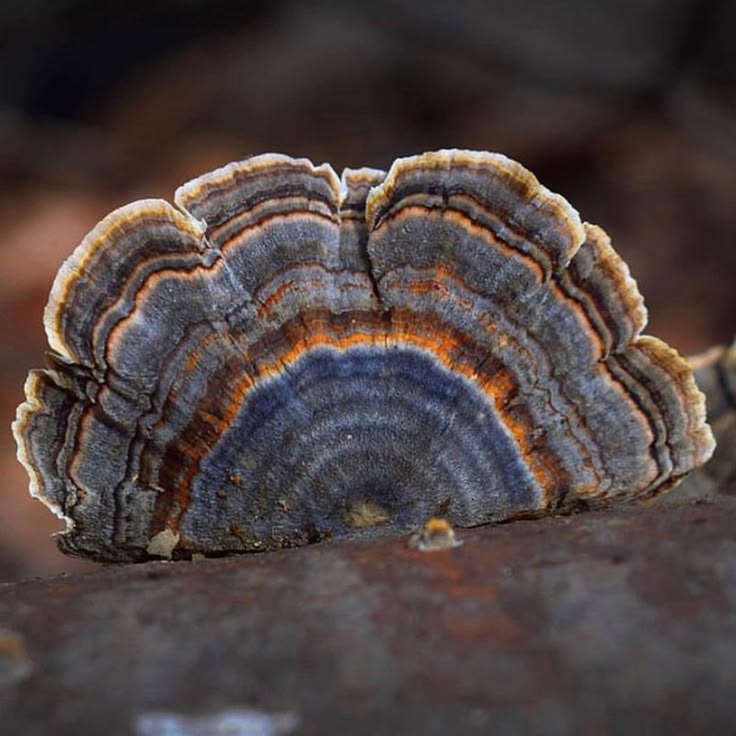
Turkey Tail Mushoom: Gut Microbiome and Anti-cancer powerhouse
Turkey Tail Mushoom: Gut Microbiome and Anti-cancer powerhouse

Couldn't load pickup availability
The world's most studied medicinal mushroom.
Turkey Tail (Trametes versicolor) has been used for centuries in Traditional Chinese Medicine and is the subject of over 400 published clinical studies. Its primary polysaccharide, PSK, has been an approved cancer adjuvant in Japan since the 1970s. For dogs: immune modulation, gut microbiome support, NK cell activation, and studied supportive care.
Important note on cancer care
Turkey Tail is supportive care that may complement veterinary oncology treatment. It is not a cancer cure and does not replace chemotherapy, surgery, radiation, or any treatment prescribed by your veterinarian.
Always work with your vet when using any supplement alongside cancer treatment. The research cited on this page refers to supportive and adjuvant use, not curative claims.
🛡️ Immune modulation via beta-glucans
Beta-glucans bind to TLR2, TLR4 and Dectin-1 receptors on immune cells, triggering the innate immune cascade that activates natural killer cells, macrophages and dendritic cells. This is immune calibration, not simple stimulation, producing a more responsive and better-regulated immune system.
🔬 NK cell and macrophage activation
PSK and PSP polysaccharides specifically upregulate natural killer cell cytotoxic activity and macrophage phagocytosis. NK cells are the immune system's primary mechanism for identifying and destroying abnormal cells before they proliferate, making their activation particularly relevant for cancer supportive care.
🌿 Prebiotic gut microbiome support
Turkey Tail's polysaccharides selectively feed beneficial gut bacteria including Lactobacillus and Bifidobacterium while inhibiting pathogenic species. Since roughly 70% of the immune system is housed in gut-associated lymphoid tissue, a balanced microbiome directly translates to improved immune function.
💊 Cancer supportive care
In a clinical veterinary study of dogs with hemangiosarcoma, Turkey Tail polysaccharide extract was associated with significantly extended median survival times versus untreated controls (117 days versus 30 days for the highest-dose group). This is supportive care data, not a cure, and should be used alongside veterinary oncology treatment.
🌱 Post-illness and antibiotic recovery
After illness or antibiotic courses that deplete both gut microbiome diversity and immune cell populations, Turkey Tail's dual action (prebiotic gut restoration and immune cell reactivation) makes it one of the most comprehensive recovery supplements available for dogs.
PSK — Japan's approved cancer adjuvant
PSK (Polysaccharide-K), known commercially as Krestin, is a protein-bound beta-glucan isolated from Trametes versicolor. It has been an approved pharmaceutical adjuvant in Japan since 1977, used alongside conventional treatment for gastric, colorectal, oesophageal, breast and lung cancers. Multiple randomised controlled trials showed PSK alongside chemotherapy improved five-year survival rates versus chemotherapy alone. It activates dendritic cell maturation, promotes a Th1 immune phenotype, and stimulates NK cell cytotoxicity — making it one of the most extensively validated natural immunomodulators in clinical medicine.
PSP — immune restoration and microbiome balance
PSP (Polysaccharide-Peptide) is a related protein-bound polysaccharide with a distinct protein moiety, providing complementary immune support through different receptor pathways. A UC Davis study on the canine gut microbiome found significant increases in Lactobacillus and Bifidobacterium and a reduction in species associated with dysbiosis, alongside improved stool quality and immune markers — validating the prebiotic gut-immune axis with canine-specific data.
Beta-glucan receptor binding — TLR2, TLR4 and Dectin-1
Turkey Tail's beta-1,3/1,6-glucans are recognised by pattern recognition receptors on innate immune cells, triggering a coordinated response: macrophage activation and cytokine secretion, dendritic cell maturation, and NK cell priming. This is genuine modulation rather than non-specific stimulation — priming immune cells to respond to real threats without the chronic inflammation that harmful overactivation produces. For dogs with allergies or autoimmune tendencies, this calibrated activation is more appropriate than broad stimulants.
The hemangiosarcoma veterinary study
Conducted by the University of Pennsylvania School of Veterinary Medicine and published in Evidence-Based Complementary and Alternative Medicine, this study evaluated Turkey Tail extract in dogs with naturally occurring splenic hemangiosarcoma, an aggressive cancer with poor prognosis. Dogs on the highest dose (100mg/kg) showed a median survival of 117 days following splenectomy, versus a historical control median of roughly 30 to 60 days for surgery alone. Researchers attributed this to immunostimulatory effects on NK cells and macrophages. It is a small study with variable results, but the most substantive canine-specific evidence currently available. Turkey Tail is supportive care — it does not cure hemangiosarcoma and should be used alongside, not instead of, veterinary treatment.
- PSK (Polysaccharide-K)Japan-approved adjuvant; NK cell and T-cell activation.
- PSP (Polysaccharide-Peptide)Microbiome restoration and immune modulation.
- Beta-1,3/1,6-GlucansTLR2, TLR4 and Dectin-1 innate immune activation.
- ErgosterolPrecursor to vitamin D2; immune cell differentiation.
- Phenolic antioxidantsQuercetin and baicalein; antioxidant and anti-inflammatory.
- ✕ Fillers or starch carriers
- ✕ Mycelium-on-grain (low beta-glucan)
- ✕ Artificial preservatives
- ✕ Synthetic binders or additives
- ✕ Irradiated or solvent-extracted material
- ✕ Anything that dilutes the active compounds
- Dogs with cancer seeking evidence-based supportive care alongside veterinary treatment
- Dogs with hemangiosarcoma, lymphoma or other immune-relevant cancers
- Seasonal allergies or chronic immune imbalance
- Recovery from illness, infection or antibiotics
- Gut dysbiosis or post-antibiotic disruption
- Daily foundational immune and gut support
- Add to food once or twice daily. Sprinkle over wet or dry food. The mild, earthy flavour is well accepted by most dogs; for picky eaters, mixing with warm bone broth activates the polysaccharides and improves palatability.
- Use consistently for cumulative benefit. Immune modulation and microbiome shifts build over weeks of daily use. This is a long-term daily supplement, not a short course — the benefits compound and are maintained with continuous use.
- For dogs with cancer, inform your vet. Turkey Tail is generally well tolerated alongside conventional treatment, but always tell your veterinary oncologist so they can account for it and monitor appropriately. It supplements, never replaces, prescribed treatment.
What is PSK, and why does it matter for dogs with cancer?
PSK is a protein-bound polysaccharide approved as a cancer treatment adjuvant in Japan since 1977. It activates dendritic cells, NK cells and T-lymphocytes that identify and respond to abnormal cells. In veterinary research, Turkey Tail polysaccharides were associated with extended survival times in dogs with hemangiosarcoma. It is supportive care and should never replace veterinary oncology treatment.
How does Turkey Tail support the gut microbiome?
Its polysaccharides act as prebiotics, selectively feeding beneficial Lactobacillus and Bifidobacterium while inhibiting pathogenic species. Since roughly 70% of the immune system lives in gut-associated lymphoid tissue, this balance directly improves immune resilience. A UC Davis study found significant beneficial microbiome shifts in supplemented dogs.
Can dogs without cancer use it?
Yes. The immune-modulating beta-glucans and prebiotic polysaccharides benefit any dog — with seasonal allergies, chronic infections, digestive issues, post-illness recovery, or simply needing daily immune resilience. Cancer supportive care is one use case among several.
How long before it shows results?
Gut microbiome shifts begin within 1 to 2 weeks of consistent daily use. Immune modulation builds over 3 to 6 weeks. For dogs with cancer, it's a long-term continuous supplement used throughout veterinary treatment rather than a defined short course.
Centuries of tradition. Decades of science.
Foundational immune and gut support — and evidence-based supportive care, always alongside your vet.